Food Labs for 4-6 Grades

Winta Ykeallo wearing a yellow apron cooking outside at a grill

PDF’s for Printable Download:

Foods Labs Quick-Start Guide Recipe Suggestions Lab Tips Packing List

Food Labs Quick-Start Guide for Cloverleaf Project Achievement

Contest Rules and Procedures

Food Labs projects (Food Fare & Between Meal Snacks) are the only projects in which food preparation should take place during project achievement competition. Other food projects are illustrated talks and not the appropriate avenues for food preparation to be demonstrated.
Cloverleaf participants provide their own equipment, ingredients, preparation, setup, and display. Cloverleaf food lab projects may not use any electrical equipment or anything with a blade to prepare their dish. Knives, blenders, hand-mixers, griddles, skillets, torches, food processors, etc. are not allowed. Menu forms are not required for 4th– 6th graders.

Food Labs Participants should:

Prepare a no cook, no bake, healthy snack in1hour.
Display the dish in a creative manner. No place setting or menu form is required for Cloverleaf division competition.
Measure all ingredients on site during the lab competition. Ingredients that will require peeling, chopping or cutting should be prepared at home and brought to the contest as knives are not allowed at the competition. Youth should not pre-measure ingredients for the recipe prior to the contest as they should demonstrate this skill at the contest.
Demonstrate laboratory safety by wearing a hairnet, apron, appropriate clothes, and closed toe shoes during food preparation projects. All jewelry should be removed prior to the contest. Gloves are not required, but ready to eat foods should not be touched with bare hands. Gloves, tongs, long handled spoons, or bakery tissue can be used.
For items below, use only:
• Commercially prepared pasteurized milk, milk products and cheeses.
• meat that is USDA inspected.
• commercially produced eggs and egg products, including mayonnaise
• commercially canned foods (Home grown fruits and vegetables are acceptable.)
Share knowledge of foods, nutrition, food safety, and project in discussion with judges based on MyPlate.

Projects and Objectives

FOODS LAB: BETWEEN MEAL SNACKS- 1 Hour
4-H’ersmay explore food and nutrition practices including understanding the food groups in MyPlate, identifying a snack that contributes essential nutrients –not just empty calories, and demonstrating best practices of food safety by preparing a snack.

4-H’ers will:
Investigate food and nutrition resources through My Plate.
Plan the recipe
Prepare the no-cook (no-bake) snack food and display
Identify the food group(s) listed in the recipe

FOODS LAB: FOOD FARE- 1 Hour
4-H’ersmay explore food and nutrition practices including understanding the food groups in My Plate, identifying a snack that contributes essential nutrients –not just empty calories, and demonstrating best practices of food safety by preparing a snack.

4-H’ers will:
Investigate food and nutrition resources through My Plate.
Plan the recipe
Prepare the no-cook (no-bake) snack food and display
Identify the food group(s) listed in the recipe
Acquire skills in planning, preparing and serving nutritious meals on a budget.

Recipe Suggestions

Recipe Ideas for Cloverleaf Project Achievement (4th -6th
Grader) in the “Between Meal Snacks” and “Food Fare” Projects

Cooking Matters
Recipes – Dole® Sunshine
Recipes for Kids (for Kids) | Nemours KidsHealth
Healthy Kid-Friendly Recipes
Recipes

Remember:

When selecting a recipe…

Cloverleaf food Labs participants should prepare a no cook, no bake, healthy snack in 1 hour.
Cloverleaf food lab projects may not use any electrical equipment or anything with a blade to prepare their dish. Knives, blenders, hand mixers, griddles, skillets, torches, food processors, etc. are not allowed.

Food, Nutrition, and Health Lab Tips

Before the Competition:

Read the contest objectives and scorecard for your project found on the 4-H website.
Visit Eat Real Food to investigate the food groups, healthy eating, and food safety.
Research recipes and identify the included food groups found on My Plate. Great places to start are Eat Real Food and What’s Cooking with USDA Foods? | USDA
Decide what recipe you will use. Feel free to create your own. Make sure your recipe lists all your ingredients with measurements and includes step-by-step instructions.
Practice making your snack. Make sure your recipe matches what you are making!
Prepare a box of needed items using the Packing Checklist.
Use recommended food safety practices in transporting and storing meat, dairy, and other perishable products in your project. Keep cold items cold.
Check with your 4-H leader to discuss needed supplies such as coolers, trays, apron, etc.

During the Competition:

Dress for success! Aprons, hair restraints, and closed toe shoes must be worn. Clothing should be clean, neat, and out of your way, and jewelry should be removed when preparing your dish.
Wash your hands before preparing food! Gloves are not required, but you should not touch ready to eat foods with your bare hands.
Don’t touch your hair or face while preparing your snack.
Clean your work space before preparing your snack. Wipe up spills as they happen.
Bring all foods and utensils needed for your snack, but remember knives and electric food equipment are not allowed in Cloverleaf projects.
Measure all your ingredients at the competition using the appropriate measuring cups or spoons; however, all peeling, chopping or cutting of ingredients should be prepared at home.
Use trays to demonstrate food safety and organization when preparing your snack.
Be sure your food has an appealing appearance and is tasty in flavor.
Creatively display your snack using your snack and any required utensils. Your display should be well organized, but does not require a place setting.
Make sure your set up, preparation, display and clean up take no longer than 1 hour.
Relax, smile, and talk with your judges about your snack and the food groups you chose to use.

After the Competition:

Share or dispose of all leftovers. Food prepared should not leave the building.
Clean your space. Make sure you collect all your belongings when done.
Thank your judges for volunteering their time to score your project.

Packing List for Food, Nutrition, and Health Labs

Packing Checklist:

Copy of recipe
Apron, hairnet or hair restraints, closed toe shoes
• Paper towels
Cleaning wipes or sanitizing solution
Ingredients (Remove all company label. Use low fat and low sodium ingredients where possible)
Measuring cups
Measuring spons
Mixing equipment – such as spoons, mixing bowls (clear glass or plastic)
Spatula or spreader
Colander
Transfer equipment – such as spoons, tongs, or plastic gloves
Trays and wax paper for organization
Display items- such as a table cloth, placemat, or table arrangement
Serving dish (bowl or plate)
Serving ware – such as paper plates and plastic utensils
Ice and cooler for cold items
Box for equipment
Can opener

Leave Behind:

Knives
Peelers
All electrical equipment (blenders, electric skillets, griddles, food processors, anything with a cord.)
Jewelry


Ages & Stages of Development

A basket with several triangle flags, all with the Georgia 4-H logo.


Grades 4th-8th

Youth may experience: Leaders may need to
Physical Development Hyperactivity (moving all the time)
Females maturing before males
Growth spurt (marking the beginning of
adolescence)
Menstruation & ejaculation beginning
Provide active learning
vary activities (avoid purely competitive
events)
Prepare for “firsts” to occur during overnight
trips (pack pads and tampons)
Avoid critiques or comments about physical
stature
Social Development The need for belonging and inclusion (Joining
clubs is popular)
Lack of always understanding others’ points of view
Moodiness
An urgency for justice and equality for all
A desire to please adults
Bullying (as the giver or receiver)
Focus on group belonging and team building
Use group learning
Encourage older mentors to work with youth
Avoid comparing youth to each other
Model and teach positive problem solving
skills
Cognitive Development Concrete thinking until about age 11
Abstract thinking beginning at age 11 (while some may never experience it)
Obsession in subjects of interest
Independent decision making; often rejecting
solutions given by adults
Use simple, short directions
Offer a wide range of activities
Learn to apply the Essential Elements of 4-H Youth Development
Give limited choices


Grades 9th-12th

Youth may experience: Leaders may need to
Physical Development The acceptance of physical changes
Continued growth – most females reach maximum height by 14 and males by 16
Avoid critiques or comments about
physical stature
Vary activities so that size doesn’t influence success
Social Development • Self-centeredness with capability of feeling empathy
• The importance of acceptance by romantic interest
• The need for belonging and inclusion while still
needing to be recognized as unique
• Increased time working and going to school
• The desire to be autonomous from parents
• Imaginary Audience Syndrome
• Let teens plan their own programs
• Establish a climate conducive to peer
support
• Emphasize personal development whenever possible
• Let teens assume responsibility while
expecting follow through
• Help in individual skill development
Cognitive Development • Decision making
• Continued cognitive development (Youth are still learning that actions have consequences –this portion of the brain is still forming.)
• Mastery of abstract thinking
• The desire to set their own goals based on their
needs
• Exploration and preparation for future roles
Provide real life problem solving
opportunities
Let teens make decisions and evaluate
outcomes
Provide opportunities for positive risk
Encourage service and career exploration


Regardless of age, leaders should:

• Correct misbehavior or code of conduct violations privately and appropriately- in the presence of another adult leader.

• Recognize effort with public encouragement.

Georgia 4-H/FFA Livestock Program Ethics Policy

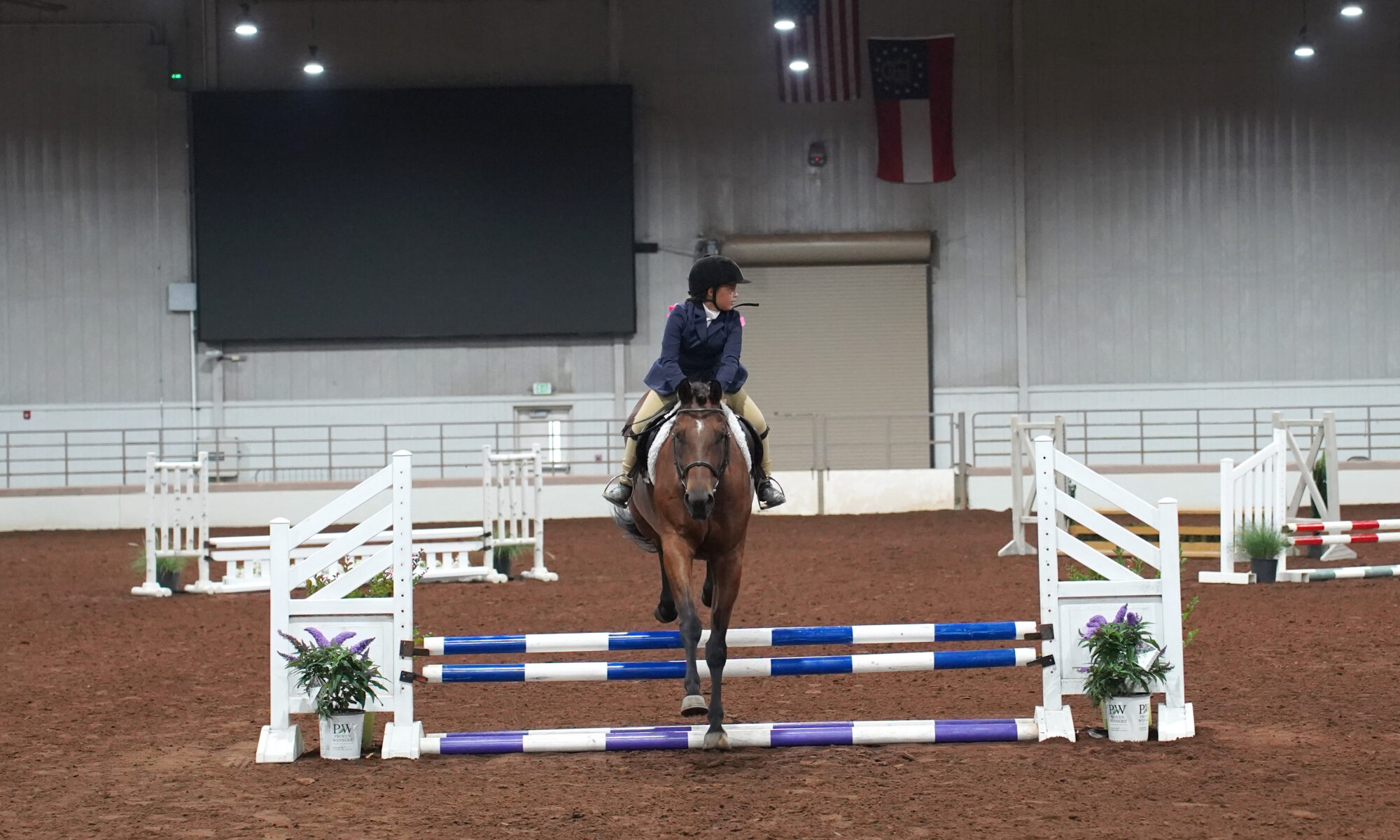
A female student riding a horse and jumping over a small fence
Download PDF for Print

This ethics policy applies to any 4-H/FFA member planning to exhibit animals at all State Livestock Shows in Georgia. All classes of livestock offered at the livestock event are included: Cattle (Beef and Dairy), Goats, Sheep, Swine, and any other livestock classes offered. This “Georgia 4‐H/FFA Livestock Program Ethics Policy” will be enhanced with additional rules and guidelines which individual fairs and livestock shows adhere to on the local, county, state, regional, and national levels.

4-H and FFA livestock project exhibitors are under the supervision of an Agricultural Education Teacher or County Extension Agent who serves as the advisor for that project. The Livestock Shows of Georgia support the educational content and leadership provided by the Georgia Cooperative Extension Service and the Georgia Agriculture Education Department. Also, the Georgia Livestock Shows fully support the administrative authority of Agricultural Education Teachers and County Extension Agents to certify the fulfillment of all validation protocols and appropriate paperwork between the exhibitor, Georgia 4-H / Georgia FFA, the livestock shows and the supervising educator. Exhibiting livestock is a privilege, and exhibitors must comply with this document and respect the authority granted to his/her supervisor.

The following practices or procedures are unacceptable and are defined as being deceptive, fraudulent, unethical, and inhumane in the care, fitting, preparation and showing of all classes of livestock. The use of any illegal drug is prohibited. Any practice used to alter the appearance of an animal entered in livestock events is prohibited. Proof of any animal being subjected to illegal and/or unethical practice(s) and/or procedure(s) described herein subjects the animal to immediate disqualification. If a violation is found of any of the following rules, this may result in immediate disqualification.

The following is a listing of rules all 4-H/FFA exhibitors must follow to enter livestock at organized competitive events.

1. Exhibitors must be bona fide members of a 4-H Club or FFA Chapter in the state of Georgia and care for their animals under the direct supervision of a County Extension Agent or Agricultural Education Teacher. Exhibitors must be enrolled in, and attending, public or private and/or home school elementary or secondary schools in Georgia. Exhibitors must meet the age requirements to be eligible to compete in Georgia 4-H/FFA State Livestock Shows.

2. All exhibitors must have viable proof of ownership available to prove the length of time animals have been owned. Market and Breeding Animals must be owned and under exhibitor’s daily care by the following deadline dates: August 1 – All State Show Market Lamb & Goat. November 1 – State Show Breeding Heifer, Market Steer, Market Heifer and Commercial Dairy Heifer. December 5 – State Market Hogs, Breeding Ewes and Breeding Does; to be eligible to participate at any State Livestock Shows within Georgia. For registered breeding animals, the official ownership date is the date reflected on the registration papers. This date is the specific date for each breed of record as recognized by the validation program. (Individual show rules may determine ownership requirements for non-market animals.) Registered breeding livestock must show the exhibitor as the sole owner of the animal on the breed association papers or certificates. Breeding animals with additional registration papers within the breed association of validation record or in another breed association may be evaluated for multiple ownership. If additional registration papers are found active within an association indicating ownership information conflicting with the exhibitor’s sole ownership designation, the breeding animal may be considered multiple owned and subject to disqualification.

3. To gain the life skills developed through the livestock projects, exhibitors must be closely engaged in the feeding, maintenance, training, grooming and overall welfare of his/her animals. Exhibitors are responsible for providing the primary and continuous daily care of livestock projects throughout the validation period. 4-H and FFA livestock project exhibitors are under the supervision of an Agricultural Education Teacher or County Extension Agent who serves as the advisor for that project. Third party involvement interfering with the County Extension Agent and Agricultural Education Teacher’s ability to properly supervise the livestock project may result in the disqualification of all state livestock projects. Livestock projects must be raised at the physical address of online entry. Prior approval must be granted by the respective State Organization designee of the appropriate organization that the 4-H or FFA member belongs to in the event the animal will be outside the direct care of the exhibitor. Failure to notify the supervising Agricultural Education Teacher/County Extension Agent and the appropriate State Organization designee of the previous may result in the disqualification of all state livestock. By signing this document, the exhibitor and parent/guardian, recognize his/her responsibilities for the primary and continuous care of livestock projects throughout the feeding period and hereby authorize the designated representatives and/or supervising Agriculture Education Teacher/County Extension Agent the right to inspect your livestock project(s) along with any other state livestock projects on premises at any time during the feeding period with or without prior notice. Any exhibitor in violation of the primary and continuous daily care rule is subject to disqualification.

4. Any method used to misrepresent the age of an animal for a class in which it is shown is deceptive and considered a violation of the rules and guidelines.

5. Showing an animal for another individual by claiming ownership in order to show in a specific livestock class or event is prohibited. False ownership is a violation of the rules and guidelines.

6. Surgery, injection, oral or insertion of foreign material under the skin and/or into the flesh of an animal to change the natural contour, conformation or appearance of an animal’s body is illegal. This includes but is not limited to injection of gas, air, oil, or other foreign substances; cutting/tearing of the hide/underneath the hide or removal of tissue in any attempt to alter the physical appearance of the animal; numbing or “deadening” an animal’s tail; cutting tendons of an animal; using foreign substances to build or cosmetically re-shape feet (this does not include medically necessary treatments for injured hooves or feet); as well as “twining” which includes the attachment of hair or hair substances (i.e. baling twine, cloth, fiber, etc.)

7. The use of unethical fitting, showing and/or handling practices or devices compromising animal welfare shall not be tolerated.

8. Livestock exhibitors must adhere to the Georgia Policy on Drug Use and Testing.

9. Livestock exhibitors will be held accountable for each species in which they exhibit as a livestock project. Livestock exhibitors will also be held accountable for the rules and guidelines for each livestock show in which they exhibit at the species State Livestock Show.

10. The Administration of the Georgia 4-H and/or FFA Programs reserve the final and absolute right to interpret these rules and to settle and determine all matters, questions, and differences in regard thereto, or otherwise arising out of or connected with or incident to “Georgia 4-H/FFA Livestock Program Ethics Policy”.

Any violation of the “Georgia 4-H/FFA Livestock Program Ethics Policy” and/or associated guidelines, as well as specific rules and regulations as designated by individual fairs and livestock shows may result in disqualification and/or probationary status and/or loss of eligibility for future participation in organized livestock competition. Possible civil penalties may be imposed by the proper authorities based on evidence provided by the livestock show of exhibitors in violation of the Federal Food, Drug and Cosmetic Act/or the animal mistreatment, neglect, and abandonment laws that apply on the local, state, and/or national levels. All rule violations will be dealt with on an individual basis by the respective State Organization and/or appropriate livestock show officials.

I, the parent/guardian, and exhibitor, by signing the entry form, am verifying that I have read the “Georgia 4-H/FFA Livestock Program Ethics Policy” and understand the consequences of and penalties involved for illegal, unethical, inhumane, and unfair practices in livestock competition. I am also verifying knowledge that my family and I may be prohibited from future participation in organized programs in the State of Georgia and could face possible criminal prosecution and/or civil penalties if implicated in any of the afore mentioned acts.

Any violation of the “Georgia 4-H/FFA Livestock Program Ethics Policy” and/or associated guidelines, as well as specific rules and regulations as designated by individual fairs and livestock shows may result in disqualification and/or probationary status and/or loss of eligibility for future participation in organized livestock competition. Possible civil penalties may be imposed by the proper authorities based on evidence provided by the livestock show of exhibitors in violation of the Federal Food, Drug and Cosmetic Act/or the animal mistreatment, neglect, and abandonment laws that apply on the local, state, and/or national levels. All rule violations will be dealt with on an individual basis by the respective State Organization and/or appropriate livestock show officials.

I, the parent/guardian, and exhibitor, am verifying that I have read the “Georgia 4-H/FFA Livestock Program Ethics Policy” and understand the consequences of and penalties involved for illegal, unethical, inhumane, and unfair practices in livestock competition. I am also verifying knowledge that my family and I may be prohibited from future participation in organized programs in the State of Georgia and could face possible criminal prosecution and/or civil penalties if implicated in any of the afore mentioned acts.

The 2023-2024 Georgia 4-H/FFA Livestock Program Ethics Policy is used in addition to the 2023-2024 Georgia 4-H and FFA State Livestock Show Rules and Regulations.
Adapted from the Texas 4-H/FFA Livestock Program Ethics Policy.

Georgia 4-H Advisory Committee By-Laws

A basket with several triangle flags, all with the Georgia 4-H logo.
Download PDF for Print

ARTICLE I – Aims and Purposes

Section 1.

The Georgia 4-H Advisory Committee holds the following as its aims and purposes in its vital role in the development and implementation of 4-H programs in this state:

A. To advise The University of Georgia College of Agricultural and Environmental Sciences Cooperative Extension Service, on behalf of the citizens of Georgia, in the planning of 4-H programs which meet the needs of Georgia youth and in developing Extension curricula which enhance the 4-H partnership with the formal educational system.

B. To conduct liaison activities in support of the Georgia 4-H Foundation, including but not limited to identification of prospective donors; developing plans for keeping donors informed about and involved in 4-H activities; assisting with 4-H budget development; nominating donors for special recognition; and recruitment of new donors.

C. To assist the UGA College of Agricultural and Environmental Sciences/Cooperative Extension Service, in planning for the maintenance and improvement of existing 4-H facilities, as well as to determine need and engage in long range planning for development of additional facilities.

D. To aid in communicating to the state at large and its leadership the value and accomplishments of 4-H programs in Georgia and the need for increasing emphasis upon 4-H and Youth Development Programs.

Section 2.

As a group which serves the UGA College of Agricultural and Environmental Sciences/Cooperative Extension Service, this Committee subscribes to and supports the aims and purposes of these entities and shall engage in no activity for pecuniary gain; nor shall this Committee engage in any activity which violates the commitment to non-discrimination of either of these bodies.

Article II-Membership

Section 1.

Membership on this Committee shall be by invitation extended to Georgians who support the aims and purposes of the Committee.

Section 2.

The Committee shall consist of approximately 50 members, subject to determination by the Membership Subcommittee and approval by the membership.

Section 3.

Membership on this Committee shall be for a term of up to three years, subject to reappointment. The Dean and Director of the UGA College of Agricultural and Environmental Sciences, the Associate Dean for Extension, the State 4-H Leader and the Associate State 4-H Leader shall be Ex-officio members. Representatives of supporting organizations shall be appointed as regular members of the Committee as vacancies occur. One third of the membership will be elected each year.

Article III – Officers

Section 1.

The affairs of this Committee shall be governed by a Chairperson, Vice Chairperson and Secretary, elected from the membership.

Section 2.

These officers shall have the duties and functions normally associated with
such offices.

Section 3.

Officers shall serve two year terms, which begin and expire at the fall committee meeting. Meetings shall be held quarterly.

Article V – Election of Membership

Section 1.

Membership Elections shall occur each year at the fall meeting, except in
the case of an election to fill a Chairperson’s unexpired term.

Section 2.

Unexpired terms of Vice Chairperson or Secretary shall be filled by appointment of the Chairperson. The Committee shall ratify such appointment at the next meeting. The unexpired term of a Chairperson shall be filled by special election after nominations from a subcommittee appointed by the Vice Chairperson.

Section 3.

The Executive Board shall name a nominating subcommittee at the last meeting prior to the fall meeting in years when the terms of the officers are to expire.

Article VI – Voting and Quorum

Section 1.

Members who have been duly invited and attend shall constitute a quorum of the Advisory Committee or any of its subcommittees.

Section 2.

The vote of a majority of those present shall be the vote of the membership of this Committee or any of its subcommittees.

Article VII – Meetings

Section 1.

This committee shall hold at least two meetings per year.
A. One in the spring, subject to the call of the Chairperson and the State 4-H Leader.
B. One in the fall, subject to the call of the Chairperson and the State 4-H Leader.
C. Additional meetings as needed shall be called by the Chairperson and the State 4-H Leader.

Section 2.

Meetings of the Executive Board shall be subject to the call of the
Chairperson.

Article VIII – Subcommittees

Section 1.

Ad hoc subcommittees shall be appointed by the Chairperson as in his/her judgement appropriate for terms not to exceed his/her own office.

Section 2.

Standing subcommittees shall consist of those named on the attached list.

1. Membership Subcommittee. This group shall consist of the Chairperson of the Advisory Committee, State 4-H Leader, and three other members appointed by the Chairperson. The Membership Subcommittee shall review the existing membership and recommend reappointment where they deem appropriate in addition to recommending replacement members or additional members. Their recommendations shall be subject to approval of the Executive Board and confirmed by the total membership.

2. Education Subcommittee. This group shall be appointed by the Chairperson, with no limit on number, to carry out those aims and purposes described in Article I, Section 1a.

3. Donor Relations Subcommittee-Fund Raising and Special Events. This group shall be appointed by the Chairperson, with no limit on number, to carry out those aims and purposes described in Article 1, Section 1b. (Possible further description: To assist the Executive board and the State 4-H Office in securing additional funds for the Georgia 4-H program.)

4. Facilities subcommittee. This group shall be appointed by the Chairperson, with no limit on number, to carry out the aims and purposes described in Article I, Section 1c. This group may be further subdivided by the Chairperson to allocate subcommittee responsibilities by individual camp.

5. Communications Subcommittee. This group shall be appointed by the Chairperson, with no limit on number, to carry out the aims and purposes described in Article I, Section 1d. Additionally, this group shall assist members of the State 4-H staff in developing methods to retain 6th graders in the 4-H program and seek ways to better provide services in the Urban area.

The Chairperson shall appoint these subcommittees, subject to the approval of the Executive Board.

Article IX – Revisions and Amendments

Section 1.

These operating procedures may be revised or amended on the vote of a quorum of the Advisory Committee at any of the regular meetings.

4-H Ambassadors Digital Sharing Resources

A green lanyard with the Georgia 4-H logo on it.

Can’t meet with people in-person for a while? Don’t worry, your Georgia 4-H Ambassador activities don’t have to stop. Now is the time to get creative and explore some other ways to share your knowledge and skills with your club, your community, your county, and your world!

Ideas for Completing Sharing Activities

Before you try out any of these ideas, get in touch with your 4-H leader to plan these sharing opportunities. They will be happy to brainstorm ideas with you! Federal law prohibits anyone under 13 years old from creating online accounts, so be sure you are following all the rules, terms, and policies of any social media/sharing platform(s) you are use. Platforms can include, but are not limited to, Instagram, Facebook, YouTube, WordPress, Blogger, etc.

Lights, Camera, Action!

You don’t have to be an award winning film maker to make videos documenting activities similar to those you would do in person! Use your phone to film short educational videos, including how-to videos for STEM and Healthy Living Activities. Ask your 4-H leader if there is anything they need help with! You could collaborate with your 4-H leader to help create content for digital lessons, post your videos on social media, or even go live on Facebook or Instagram! You may also consider creating a YouTube Channel. This personal channel would be a place for you to upload and share any videos you create.

Wow Them with Words

Ask your 4-H leader if you can write a column for your county’s 4-H newsletter. You would want to keep the column short – perhaps share an interesting fact or two, why the information is important and relevant to readers, and a credible source where people can find more information. Also, if the paper allows you to include a photo, please do so! Photos draw readers in – just make sure you provide a nice, clear photo of people in action.

You may want to consider starting your own 4-H ambassador blog! A blog (short for web log) is a journal where you share text, photos, and/or video clips. WordPress and Blogger are two common blogging platforms. Many times, blogs teach people how to do something or document an experience. Some professional bloggers choose to share recipes, the steps involved in making/doing something, etc.

Be a Positive “Influencer”

Use your social media channels to post positive, credible information about your ambassador content area. Graphic design programs (such as Canva) allow you to create posts that are specifically formatted/sized for different social media platforms. This could be a way to share fun/interesting facts in a quick way. If you aren’t sure where to find credible information, refer back to your ambassador book, check out some of the sources below, or check with your 4-H leader. If in doubt, do not post information from questionable sources!

Exhibits

Many fairs, festivals, and even some 4-H events allow people to share exhibits. Consider working on your exhibit(s) now – grab some poster boards, construction paper, glue sticks, and get to work! Consider posting a photo of your exhibit online (maybe social media or your blog) to share with people instantly!

Fun with Family!

You may be spending a lot of time with your family – why not share what you know with them? They may have just become your best in-person audience, and they may even be able to help you with your video, written, or social media ideas! Practice on your family before you livestream a presentation.

Learning and Activity Resources:

STEM Resources

National 4-H Council – STEM Lab: National 4-H Council’s STEM lab offers over 20 free STEM-inspired activities for families. Each activity requires minimal supplies (most items are common, household goods), have easy-to-follow instructions, and can be completed in less than an hour!

National 4-H Council – National Youth Science Day: Since 2008, National 4-H Council encourages youth to complete the National Youth Science Day challenge each fall. Past challenges including supply lists,
instructions, and youth and facilitator guides are available for download. Depending on the challenge, some supplies are easy to obtain, while others may be more difficult.

NASA – GLOBE Observer: NASA’s Global Learning and Observations to Benefit the Environment (GLOBE) Observer program allows participants to contribute data to civic science projects about clouds, mosquito habitats, land cover, and trees. After downloading the free app, participants observe natural settings and share their findings with NASA scientists.

Scientific American – Bring Science Home: Scientific American is the oldest continually published magazine in the US. In addition to videos, podcasts, and blogs, the “Bring Science Home” online section contains science activities for youth ages 6-12 that require few supplies and be completed in 30 minutes.

Extreme Event: Extreme Event is a role-playing game that teaches about community resilience during natural disasters (flood, hurricane, or earthquake). The kits were developed by the National Academy of Sciences’ Koshland Science Museum (now called LabX).

Design Squad: Design Squad Global by PBS Kids is an online program for middle school students to solve problems by using the engineering design process. Each week, the website is updated with challenges, videos, and activities.

Healthy Living Resources

National 4-H Council- 4-H Healthy Living Activity Guide: Download the 4-H Healthy Living Activity Guide for 30 hands-on, educational activities to help your child live a happy, healthy life.

MyPlate: Your go-to source for info about MyPlate, food groups, and dietary recommendations.

MyPlate Kid’s Place: MyPlate Kid’s Place includes games, videos, songs, and activity sheets to help kids learn about food, nutrition, and physical activity.

Food Science Activities For Kids: Penn State University offers a list of easy, hands-on activities to help kids learn about Food Science.

UGA Extension’s FoodTalk.org: Food-talk includes simple recipes, as well as many quick and easy instructional videos. Get the whole family involved in cooking with foodtalk.org.

FoodHero: FoodHero, from Oregon State University, offers kid-approved recipes, cooking videos, activity sheets and coloring pages.

Fight BAC: The Partnership for Food Safety Education’s Fight BAC!® for Kids section includes ideas and fun activities for kids that teach them about the basics of safe food handling.

Information Resources

Data and/or statistics can be used to demonstrate the importance of your Ambassador work. Here are some excellent resources for collecting data about your community and state:

American Fact Finder – Factfinder for the Nation or https://data.census.gov/

GeorgiaDATA, Georgia’s Central Data Repository – https://georgiadata.org

National Center for Education Statistics-https://nces.ed.gov/datalab/index.aspx

Annie E. Casey Foundation Kids Count Data Center – http://datacenter.kidscount.org/

Southern Rural Development Center Data – Home | Southern Rural Development Center

Also, we want to make sure that you utilize credible sources of information to educate yourself and others about any topic. When we say “credible,” what we mean is that the information comes from sources that are high quality and trustworthy. When you use credible sources, you demonstrate and build trust with your audience, which greatly enhances the effectiveness of your message. The highest quality research is always built on another high-quality research. To that end, please check out the following sites which have additional info, videos, etc., to help you better understand how to evaluate a source’s credibility:

University of Georgia – “Finding Reliable Sources”

University of Kansas Libraries – “Evaluating Sources for Credibility”

University of Idaho “Engl102 Library Research Unit Guide for Students”

Georgia 4-H Dress Guidance

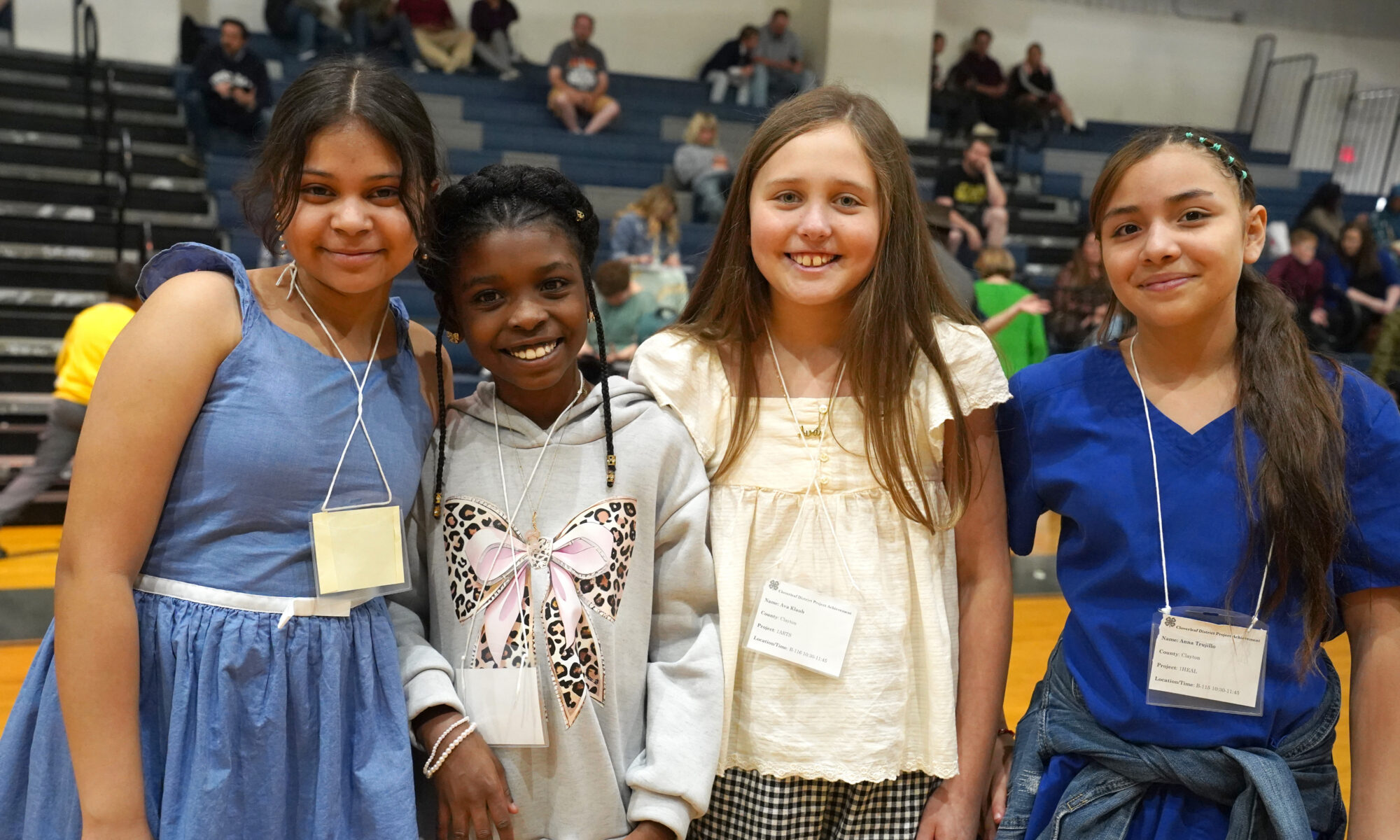
Four girls smiling at the camera in a school gym

The Georgia 4-H Dress Guidance is designed to foster a positive learning environment and ensure clothing is appropriate for the designated activity.

General Guidelines

General Appearance: Clothing should be neat, clean, and free of holes including jeans and pants.
Coverage: Clothing must provide full coverage of the torso, midriff, and backside at all times. Both tops and bottoms must be worn to ensure that bare skin is not exposed in these areas and that all undergarments are completely concealed.
Length & Movement: Shorts, skirts, skorts, and dresses must be at least mid-thigh length. These garments must provide consistent, full coverage through all ranges of motion, including standing, sitting, and bending
Footwear: Shoes must be worn at all times.
At 4-H Camp: Shoes with backstraps are required.
Headwear: Hats and headwear are permitted when appropriate for the specific activity or venue.

Prohibited Items:

• Clothing advertising alcohol/tobacco or anything violating the 4-H Code of Conduct.
• Pajamas outside of sleeping areas.
• Tube tops or backless tops
• Spaghetti straps, halter tops, or strapless
Formal Exception: Spaghetti straps and strapless dresses are only permitted during formal banquet events.

Dress Categories

Casual

• T-shirts, shirts without collars or sleeves
• Shorts, skirts, skorts
• Jeans/pants
• Tennis shoes or sandals

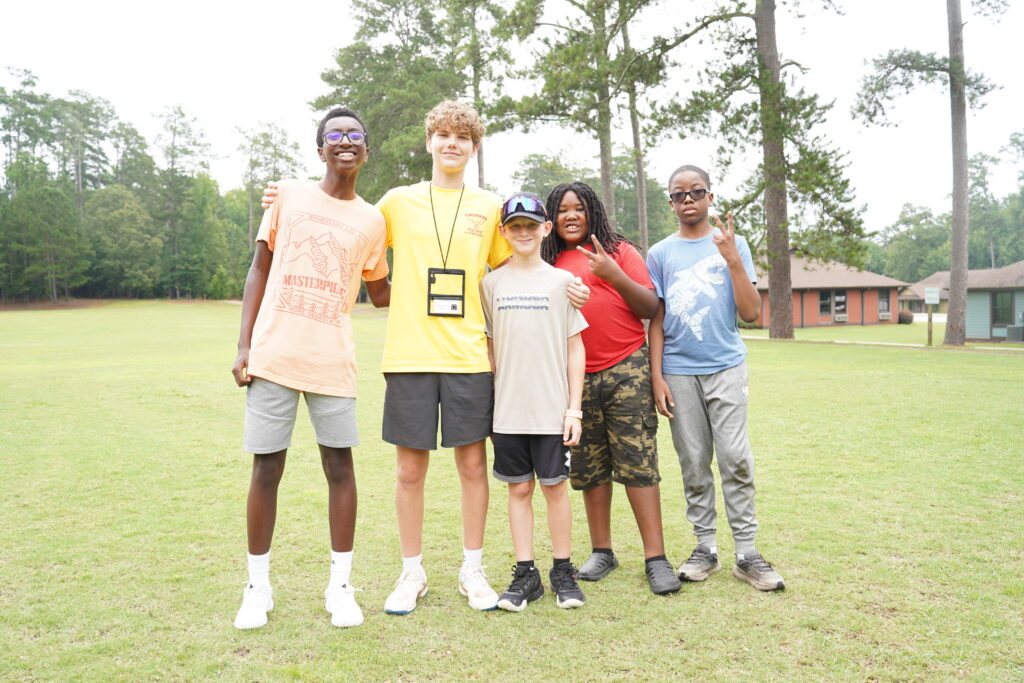
Example of Casual Dress:A group of five smiling young men standing in a row on a grassy field at a 4-H camp, demonstrating a casual dress code. They are wearing T-shirts, athletic shorts, and sneakers.

Business Casual

• Bottoms: Slacks, pants, capris, skirts, or clean/pressed denim.
• Tops: Polos or shirts with collars and sleeves.
• Footwear: Flats, low-heeled shoes, boots, or appropriate tennis shoes.
Not Allowed: Shorts, T-shirts, flip-flops, or baseball caps.

Example of Business Casual Dress:A group of youth and adults pose for a group photo indoors. The group is dressed in casual business clothes, predominantly in green, black, and white. Many individuals are wearing green 4-H branded polo shirts, blazers, or cardigans paired with khaki or dark trousers and skirts.

Professional

• Attire: Suit Jackets, dress pants, skirts, dresses, and collared/dress shirts or blouses. Ties are optional.
Footwear: Dress shoes or appropriate sandals.
Not Allowed: Denim, tennis shoes, flip-flops, or hats.

Examples of Professional Dress:
Two young men pose together outdoors, representing professional attire. One individual on the left wears a maroon suit jacket with a crisp white dress shirt and a solid black tie. The individual on the right wears a navy-blue suit jacket with a white dress shirt and a green and blue striped bowtie featuring 4-H clover patterns.

Three women standing in front of a stone wall, illustrating professional attire for an awards setting. The 4-H member in the center holds a "2025 Georgia 4-H Achievement Scholarship" certificate and wears a floral dress.

Formal

• Attire: Suits with ties; formal dresses or gowns.
• Dresses: Strapless, halter, or spaghetti straps are acceptable for formal/banquet attire only. Dresses may not be backless, low-cut, or have exposed midriffs or high slits.
• Footwear: Dress shoes or appropriate sandals.

Example of Formal Dress:A group of ten individuals stands in a row for a group photo in front of a dark blue or black draped curtain, demonstrating formal evening attire. The young women are wearing various floor-length formal gowns, including a lace-topped emerald green dress, a black velvet gown, a sleeveless bright orange dress, and a vibrant pink floral patterned dress with a ruffled waist. The young men are dressed in formal suits and tuxedos, featuring a grey three-piece suit with a vest, a white suit jacket with a black tie, and a classic dark suit paired with a black bowtie.

Event Administration

• Event-Specific Rules: Many major events (Summer Camp, State Council, State Congress) have specific dress codes; participants should review those unique guidelines prior to the event.
• Final Authority: Event leaders have the final decision in determining if apparel is appropriate.
• Modifications: Leaders may require individuals to modify their clothing selection if these guidelines are not met.

Quick Tips for Success

• Check the Event: Major events like State Congress or Summer Camp often have their own specific lists. Check your registration packet!
• When in Doubt: Bring a “backup” outfit. If a leader asks you to modify your clothing, you’ll be ready.
Formal Exception: Spaghetti straps and strapless dresses are only permitted during formal banquet events.

What is Group Think?

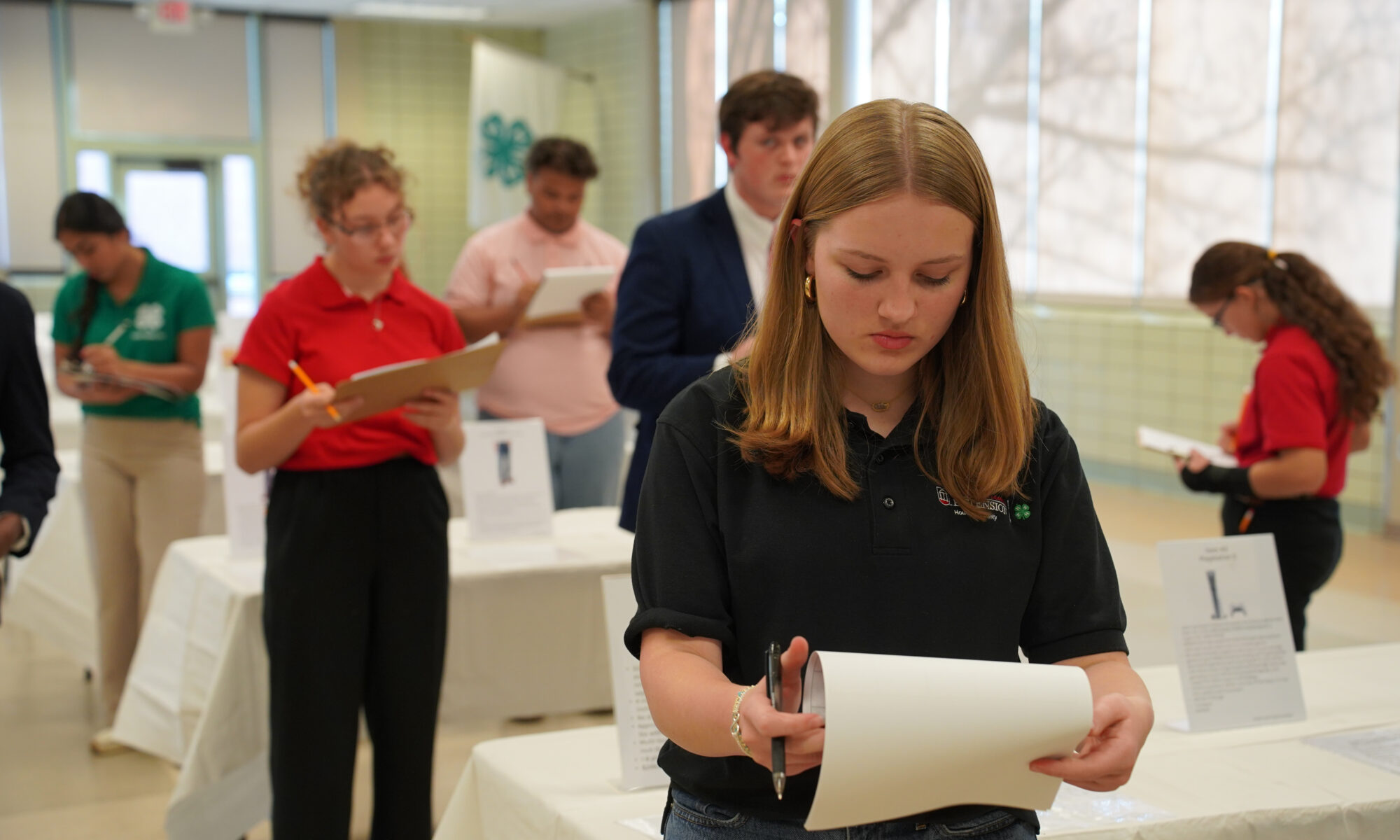
A contestant studying a clipboard

At the State Cotton Boll and Consumer Judging Contest, there will be a
new segment added to the competition called Group Think. The purpose of
Group Think is to help you develop the skills you will need when the decision
to be made is no longer an individual decision, but rather one that needs to
be determined by a group. In its simplest form, group decision-making can
be described in five steps:

1. Determine the issue or problem. State the facts.
2. Examine options and solutions to the problem.
3. List the personal or social goals (or criteria) bearing on the problem.
4. Evaluate the alternatives according to the goals or criteria.
5. Make a decision based on the evaluation.

When making decisions, it is important to consider and evaluate more than
one course of action. Therefore, part of the Group Think process is to develop
many options for “solving” the situation. Alternatives often include personal
values. The Group Think helps you be aware of your value preferences and
the value preferences of others. You then learn how these similarities and
differences intersect, and how the group can work to make decisions that
include the most desirable outcomes for all involved.

Group Think Structure

Teams have 10 minutes of processing time. A guideline for using this time is:
• 3 minutes to read and think through the situation or problem
• 7 minutes to discuss and begin making decisions
• It is not required, but it is often helpful to use a Product Comparison Sheet. The Product Comparison Sheet helps the team keep notes for the evaluation of the criteria vs. the suggested alternatives. It may also be helpful during the team presentation.
• In the discussion, the team should cover these five decision-making steps:

1. State the situation or problem.
2. List the alternatives found in the situation or products and add your own options as determined necessary.
3. List the criteria stated in the case study and add other criteria as determined.
4. Evaluate the alternatives based on the criteria.
5. Select the best choice(s) for the situation and explain.

• Don’t limit the ideas for solutions to just a few. Think creatively and come up with many alternatives.
• As a team, begin planning the presentation to the judge(s).
• Judges will be listening to what is said and watching the group dynamics.
• Teams will be warned when they have 2 minutes left of their discussion time.
Each team will have the opportunity to present their final statement. The presentation should be no longer than 2 minutes. The presentation should include an overview of the five decision-making steps, including the best choice or final decision.

Group Think Example Score Sheet

Team Participation (40 Points possible)

Participation: All team members are actively engaged and participate (1-10 points)
Reading: Speaking and listening skills are demonstrated by each team member (1-10 points)
Discussing: Speaking and listening skills are demonstrated by each team member (1-10 points)
Summarizing: Reaching consensus based on discussion of options and standards (1-10 points)

Team Process (60 Points possible)

Alternative Solutions: Variety of options generated (1-10 points)
Definitions: Defining terms are used make decision in terms of the best outcome for the team (1-10 points)
Solution: Conclusions reached are explained and reasonable for the solution (10-20 points)
Presentation: Total team effort is shown:
1. Every team member contributes to reach group consensus (1-10 points)
2. A clear statement of the group decision is presented to the judges (1-10 points)

For more information visit the Cotton Boll and Consumer Judging website. 

Cotton Boll and Consumer Judging Objectives, Rules, and Awards

A contestant studying a clipboard

Objectives

• To understand the importance of cotton as an agricultural commodity

• To promote cotton in communities

• To make knowledgeable, rational decisions when purchasing goods and services

• To select, use, maintain and dispose of goods and services in ways that maximize resources

• To obtain clothing, goods and services to meet needs and reflect lifestyles, personal values and goals

• To act as responsible consumer-citizen with an understanding of the rights and responsibilities of the consumer, business and government

• To learn to communicate reasons for choices made

Competition Guidelines

1. All participants must participate in a county 4-H Cotton Boll and Consumer Judging program.

2. The Junior Competition is for 4th – 8th grade youth. The Senior Competition is for 9th – 12th grade youth. A county may compete with a maximum of 20 youth for each competition level. The top four scoring participants in each competition level will be considered a team, with the top 3 scores counting, unless teams are designated prior to the contest. Counties have the option of competing with up to 2 teams per competition level. If a county has less than three contestants, they may participate as individuals.

3. The Consumer Judging portion of the contest will occur live and in-person at designated area contest locations.

4. Junior cotton presentations consist of a 30 second commercial and a poster that promotes cotton and its use. Juniors will prepare the poster to be no larger than 14” x 22” – half of a large size poster board. Junior Commercials are judged on appearance (5%), delivery (20%), creativity (20%), overall quality (20%), poster (30%) and length (5%). Use of notes is discouraged.

5. Senior cotton presentations consist of a 90 second advertisement about cotton. Seniors are not graded on posters, but limited props and costumes may be used. Seniors are judged on appearance (5%), delivery (20%), creativity (20%), accuracy of information (20%) organization of contents (15%), overall quality (15%), and length (5%).

6. For both reasons and commercials/PSAs, judges will come together to judge the first five 4-H’ers collectively in order to create a consist scoring pattern. Once the consistent scoring pattern has been established, judges will divide into their individual stations for judging. The number of judges for each station (1 or 2) will depend on the availability of screened volunteers and staff at the district contest.

7. Teams will judge 4 classes of consumer items and give oral reasons on one class. Use of notes is discouraged, and a penalty will be given if notes are used. Youth will have a maximum of 7 minutes for each class and a maximum of 7 minutes for reasons preparation.

8. Youth are judged based on 4 judging classes (50 points each for 200 points total), oral reasons (50 points), and a cotton presentation (100 points).

9. While blank paper is allowed as well as pre-printed blank product comparison forms. Notes and reasons template forms are prohibited during the consumer judging portion of the contest. Use of presentation notes, including cue cards and other prompts, are discouraged in the Cotton Boll portion of the contest.

10. The top 4 participants in a county in each competition level will be named the winning team, with the top three scores counting.

11. Ties will be broken using: Judging Total (1st), Oral Reasons (2nd), and Class 3 (3rd).

12. Cell phones/electronic devices are prohibited from being used during the contest.

Awards and Recognition

• Each participant will receive a special events pin.

• Award Certificates may be printed by the county and will be available in Canva.

• The district winning team will be the county team with the highest total team score (sum of the 3 highest individual scores per county).

• The district winning team will consist of the 3 highest scoring individuals and the 4th place alternate.

• The highest scoring Junior and Senior team at each contest will be recognized. Each team member (total of 4) will receive a prize.


• The 2 Senior teams with the highest score at each contest will be eligible to compete in the State 4-H Cotton Boll and Consumer Judging Contest.

• The high overall individual in the Senior Division (9th – 12th grade) at each contest will be invited to compete at the State Cotton Boll and Consumer Judging Contest for the High Overall Individual Award. This individual may also be a member of the 1st or 2nd place Senior team or may just compete as an individual.

• Special recognition will be awarded to the high individuals at each area contest. We will continue to recognize individuals in the categories of overall, individual, high judging score, and high advertisement/commercial in the age divisions of Cloverleaf (4th-6th), Junior (7th and 8th), and Senior (9th-12th). However, for the purposes of team recognition, 4th-6th graders will still be included in the Junior division. The purpose of this is to encourage some of our youngest participants in the program!

State Contest Awards and Recognition

• The 2 Senior teams with the highest score at each contest will be eligible to compete in the State 4-H Cotton Boll and Consumer Judging Contest.

• There will be NO Commercials/Advertisements at State Cotton Boll and Consumer Judging contest. At the State Contest a Group Think component will be implemented to reflect what competitors will see at the national level. Seniors will judge 2 additional classes (for a total of 6 classes) that are provided in the study guide/preparation materials. Seniors will give 2 sets of reasons at the State Contest.

• Group Think scoring will be broken down into two sections (team participation and team process). In team participation you can receive up to 40 points (Participation 1-10, Reading 1-10, Discussing 1-10, and Summarizing 1-10). In the team process category you can receive up to 60 points (Alternative solutions 1-10 points, Definitions 1-10, Solution 1-20 points, and Presentation (Effort shown 1-10 and Clear statement of Group Decision is presented 1-10). Refer to the Group Think rubric in the study guide.

• The high overall individual in the Senior Division (9th – 12th grade) at each contest will be invited to compete at the State Cotton Boll and Consumer Judging Contest for the High Overall Individual Award. This individual may also be a member of the 1st or 2nd place Senior team or may just compete as an individual.

• The State Winning Senior Team will be the county team with the highest total team score (sum of the 3 highest individual scores per county). The winning team will consist of the 3 highest scoring individuals and the 4th place alternate.

• The High Overall Individual Winner is the Senior 4-H’er with the highest total score at the state contest.

• The State Winning Senior Team and High Overall Senior Individual will be eligible for Master 4-H’er status; will receive a medal; and will participate in the recognition of Special Events Winners at State 4-H Congress. The banquet meal and lodging expenses will be paid for the team and coach; however, travel costs are not covered.

• The State Winning Senior Team of four members will be invited to participate in the National Consumer Decision Making Contest. Registration fees will be paid for 4 members and one team coach.

• State Winning Team Members may compete in future years as individuals. State Winning Team Members cannot compete again as a team. State High Individuals may compete in future years and if placing first, gain Master status until Georgia 4-H eligibility is completed.

• The Second Place State Winning Team of four members will be invited to participate in either the National FCS Skill-A-Thon or the National FCS Bowl. Travel costs will not be provided. This team will not receive Master 4-H’er status and may compete in the state competition again.


If an individual with a disability may require assistance or accommodation in order to participate in
this program, please contact us at least two weeks prior to the event.

For more information, contact your local UGA Extension office at
1-800-ASK-UGA1
.

Performing Arts – Drama Senior Project Guide

A green lanyard with the Georgia 4-H logo on it.
Download PDF for Print

Overview

Georgia 4-H Project Achievement empowers young people with skills for a lifetime. Through a competitive process, students explore their interests, unleash their creativity, share their work, and celebrate their achievements! This guide provides 9th—12th graders with examples for getting started with their project exploration.

Overview of Project Achievement Process

1) Choose project
2) Develop skills in leadership and service
3) Prepare portfolio for work completed from January 1 – December 31
4) Prepare presentation
5) Practice
6) Compete
7) Reflect

Description of Performing Arts – Drama Project

4-H’ers may explore areas of expression using their bodies and voices to convey a message in a performance. Through this project 4-H’ers may:

• Develop an appreciation for appropriate use of leisure time
• Express originality and creativity through performance
• Identify different methods of expression through drama which may include monologue, spoken word/ poetry, oral interpretation, comedy, or pantomime performances with an emphasis on acting/drama skills
• Learn how to select dramatic performance pieces
• Explore career opportunities in the area of performing arts

Each Performing Arts Drama Participant will:

• Prepare and present a 4 minute performance that includes a short
introduction. Talent acts should primarily include a dramatic presentation. Background music is allowed, but singing, dancing, or playing an instrument in this project is not appropriate.
• Use the microphone provided at the contest and not his/her own personal microphone.

Examples of Project Development Experiences

Enroll in drama classes, lessons, workshops, or camps to build your stage confidence and stage presence — consider musical theatre, improv, creative theatre, theatre therapy, etc.
Have yourself critiqued—Remember practice makes perfect
Attend professional performances
Participate in a school, community, or church drama group, such as your school’s literary team, solo and ensemble, etc.
Audition for performing groups, such as Georgia 4-H Clovers & Company, theatre camps, etc.
Enter talent shows, direct a local play, and/or create your own monologue
Interview theatre teachers, directors, or professional actors
Organize a book of selections for community performances

Project Sharing and Helping Examples

Form a performing arts group to perform for other 4-H’ers, your community, or at district or statewide events
Start a project club for younger 4-H’ers and teach performance techniques. Consider performing at such places as elder care homes, hospitals, local theaters, festivals, music stores, etc.
Plan your own 4-H Variety Show, such as Valentine Variety Show, Christmas Clovers Chorus, caroling, etc.
Make props or backdrops for a local theatre group
Create your own musical theatre review with younger students
Teach the basics to younger kids at day care centers, day camps, or other youth groups
Volunteer to assist the band, chorus, or drama coordinator as a leader for new students
Teach others to write effective dialogue and monologues
Showcase your work in a performing arts mini-booth at a local fair, library, community festival, etc.
Mentor a younger 4-H’er in the Performing Arts General project

Considerations in Performance Selection

Showcasing your skill is important. Be sure to highlight your unique talents.
Consider your performing mechanics, such as diction and poise.
Characterization is 40 points of your total score! This includes facial expression, costume, skills, and stage presence.
Consider filming yourself or performing in front of a mirror.
Any song, routine, costume, etc. should be appropriate and comply with the 4-H Code of Conduct.
Practice a brief introduction that includes your name, county, length of study, name of selection, and author. You may also choose to include the performance’s origin/history.
Make sure you time yourself—including your introduction, you have a total of 4 minutes.
Be dramatic! That is what this project is all about!

Recommended Resources

Project Achievement – Georgia 4-H
Atlanta Theater: Broadway Shows, Musicals, Plays, Concerts in 2026-2027
Fox Theatre Atlanta | Broadway, Concerts, Private Events & History | Fox Theatre
How to act: stage stars share their acting tips | Theatre | The Guardian

At Competition

Talent acts should primarily include a dramatic presentation. Background music is allowed, but singing, dancing, or playing an instrument in this project is not appropriate. Performances will be judged on introduction, mechanics, imagination and creativity, characterization, script, and time. Acts are limited to 4 minutes total. Youth are required to use microphones provided at the contest.

Prepared by: Cheryl Varnadoe and Rachel Grimsley
Reviewed by: Keri Hobbs, Jason Estep, and Jennifer Cantwell


Fashion Revue Senior Project Guide

A green lanyard with the Georgia 4-H logo on it.
Download PDF for Print

Overview

Georgia 4-H Project Achievement empowers young people with skills for a lifetime. Through a competitive process, students explore their interests, unleash their creativity, share their work, and celebrate their achievements! This guide provides 9th—12th graders with examples for getting started with their project exploration.

Overview of Project Achievement Process

1) Choose project
2) Develop skills in leadership and service
3) Prepare portfolio for work completed from January 1 – December 31
4) Prepare presentation
5) Practice
6) Compete
7) Reflect

Description of Fashion Revue Project

4-H’ers may explore the explore clothing through the experiences of designing and constructing garments and accessories. Through this project
4-H’ers may:

• Learn about various fibers and the vocabulary used in fashion industry
• Understand basic elements and principles of art as related to improved personal appearance
• Develop ability to select clothing to enhance appearance and self-esteem, identify appropriate fit of clothing, and determine value based on quality
• Select and use sewing and pressing equipment correctly
• Develop skills to construct an outfit including fabric and notion selection, pattern use, and construction
• Develop skills in modeling clothing and accessories
• Explore career opportunities related to fashion, merchandising, and clothing construction

Examples of Project Development Experiences

Attend/participate in local fashion shows
Work or volunteer in a fabric or clothing store
Research different types and uses of fabric and learn about current fashion trends
Interview local seamstresses/tailors about how patterns are chosen, adapted, and sewn
Analyze values of garments by comparing cost of materials and labor versus sale price
Take a sewing class and make articles of clothing for different seasons of the year

Project Sharing and Helping Examples

Teach 4-H’ers about pattern and fabric selection and how to sew simple articles of clothing
Sew costumes for local theatre group productions
Teach summer day camp classes on different types of fabric and their uses
Plan a local fashion show; coach participants in modeling techniques; narrate show by describing fashion styles, purpose of garments, and suitable fabric choices
Prepare a fashion portfolio to share with others for different seasons of the year at club meetings or special events
Research and sew articles of clothing to donate to preemies in hospital NICU settings or to seniors at senior homes
Teach a project club on building a wardrobe on a budget
Lead a group in sewing garments for a service project
Demonstrate accessory selection skills to 4-H Club members, school classes, civic clubs, and senior homes
Teach others how to make a clothing item by evaluating price, fabric durability, and purpose
Mentor a younger 4-H’er in the Creative Stitchery project

Special Considerations

This project should show an appreciation of fashion through actual skill demonstration or knowledge gained through study.
The outfit modeled at competition must have been created during the current 4-H year and must not have been judged in a previous year in a district or state 4-H contest.
After the modeling session, 4-H’ers will change into any outfit and leave the modeled garment to be judged on construction.
Refer to the 4-H Quality Construction Checklist when creating the garment for competition.
Be sure to discuss with and bring along a parent/guardian for all modeling opportunities.

Recommended Resources

Project Achievement – Georgia 4-H
College of Family and Consumer Sciences | UGA FACS
Georgia Fashion Schools – Fashion Schools USA
UGA Youth and Summer Programs and Courses

At Competition

Fashion Revue competitors must bring their homemade garment made during the 4-H program year. At the competition, the 4-H’er should:
Model this outfit
Answer questions on outfit construction
See the project guidelines for exact specifications.

Prepared by: Cheryl Varnadoe and Elyse Daniel
Reviewed by: Jason Estep, Keri Hobbs, Mandy Marable, and Craven Hudson