

What is Wildlife Judging?
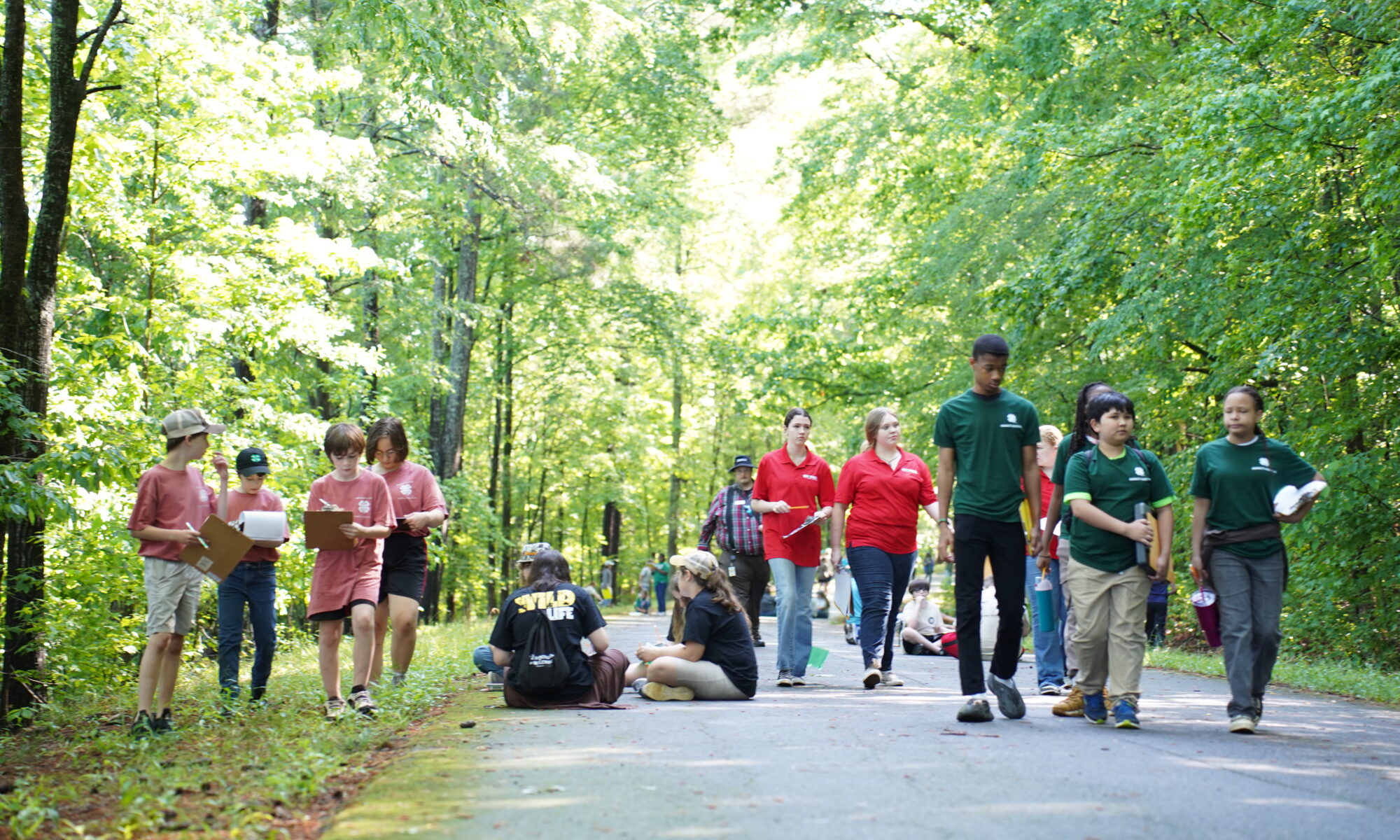
Wildlife Judging is a 4-H contest that challenges youth in grades 4-12 to learn about Georgia wildlife species and habitat management practices for conservation success. Youth participating in the Georgia 4-H Wildlife Judging contest will be able to identify and describe characteristics of common wildlife species of Georgia and select best management practices for given scenarios and sites. Georgia is one of the most biologically rich states in the nation, ranking 2nd in amphibian species, 3rd in freshwater fish species, and 7th in reptile species.
Overview of a Wildlife Judging Contest
The contest is divided into 3 activities. All activities (except 3-A) are completed and scored individually.
Activity 1-A: Written Knowledge Test: Youth will be given a multiple choice test about wildlife material (vocabulary words, terms, concepts, etc.)
Activity 1-B: Specimen Identification: Youth will be provided wildlife specimens (furs, skulls, tracks, feathers, etc.) and will identify the species.
Activity 2: Wildlife Management Practices: Youth will survey an outdoor site and provide different wildlife management practices for different species based on a scenario.
Activity 3-A: Wildlife Management Plan: Youth will work in teams to develop a management plan for 1 or 2 wildlife species after surveying an outdoor site and learning about the land use goals.
Activity 3-B*: Oral Defense of Wildlife Management Plan: After creating their plan, youth will individually answer broad, pre-determined questions about the plan they developed to a judge panel. *Only occurs at the state contest
A pre-determined list of species is outlined in the Georgia 4-H Wildlife Judging Contest Guidelines.
Junior competitors learn information about 10 wildlife species. Senior competitors learn information about 22 wildlife species.
The contest is divided into a Junior Division for grades 4-8 and a Senior Division for grade 9-12.
Youth will be trained in wildlife-related content under the direction of a Certified Wildlife Judging Coach.
The current version of the Georgia 4-H Wildlife Judging Contest Guidelines provides information for the contest procedures and rules.
Considerations for 4-H Staff
A team is comprised of a minimum of 3 youth from the same county in the same division.
Counties can designate up to 5 teams per division. This is important because one activity during the contest is a team-based activity where youth work together to create a written management plan.
Counties cannot mix grade divisions to comprise a team. Counties with fewer than 3 youth per division will have these youth assigned to an at-large wild card team. These youth will compete as individuals and eligible for all individual awards.
For the Georgia 4-H Wildlife Judging contest, only the Southeast Mixed and Outer Coastal Plain Forest ecoregion (as defined in the national Wildlife Habitat Education Program manual) is used. The Wetlands and Urban descriptions are not applicable to the Georgia 4-H contest.
Preparation Ideas for Coaches
Each coach can determine the number of practices held during the judging season. Ideal practices last 1-2 hours. Some teams choose to practice multiple times a week for a few months prior to the contest while other teams meet year-round. It’s important to remember that weather and seasonal changes (i.e. deciduous trees without leaves) can affect outdoor learning spaces.
Practices should include outdoor sites (for Activity 2 and 3) and classroom lessons. Many concepts that are included in Activity 1-A can be viewed in outdoor settings. Students learn best through active experiences – consider including outdoor recreation activities like hiking, fishing, etc., as part of a practice session.
Teams are encouraged to gather wildlife specimens and use supplemental photographs as needed. 3-D printed replicas are also viable and inexpensive options. Georgia law prohibits keeping most native wildlife species as pets. The law also generally prohibits possessing parts of protected non-game wildlife, such as tortoise shells. For information about the special permits needed to exhibit wildlife for educational purposes, contact the Georgia DNR Special Permits Unit.
Senior youth may feel intimidated when learning to present their oral defense of the management plan for evaluation. Have youth first practice answering the questions to a peer before sharing responses with an adult.
A great way for older, experienced youth to assist at practices is to have them co-develop the scenarios for Activity 2 and 3.
Remember to infuse fun into this experience! Not every practice has to directly relate to the content that is part of the contest. For example, consider building bird feeders and bee hotels or creating wildlife art during a practice.
There are many state agencies and resources that would likely be willing to assist with coaching, serve as a speaker, offer tours, etc. The Georgia Department of Natural Resources and Georgia Forestry Commission have employees who assist with public education and outreach efforts. Additionally, DNR Wildlife Management Areas, Public Fishing Areas, Hatcheries, Education Centers, and State Parks and Historic Sites are all places that would be great for site evaluation.
Recommended Resources
National Wildlife Habitat Education Program (WHEP): https://www.whep.org/
Georgia 4-H Wildlife Judging: https://georgia4h.org/wildlife
Georgia 4-H Wildlife Resources: https://georgia4h.org/wildliferesources
Contact
Kasey Bozeman, State 4-H Science Specialist
Dr. Michael Kohl, Associate Professor and Extension Wildlife Specialist